
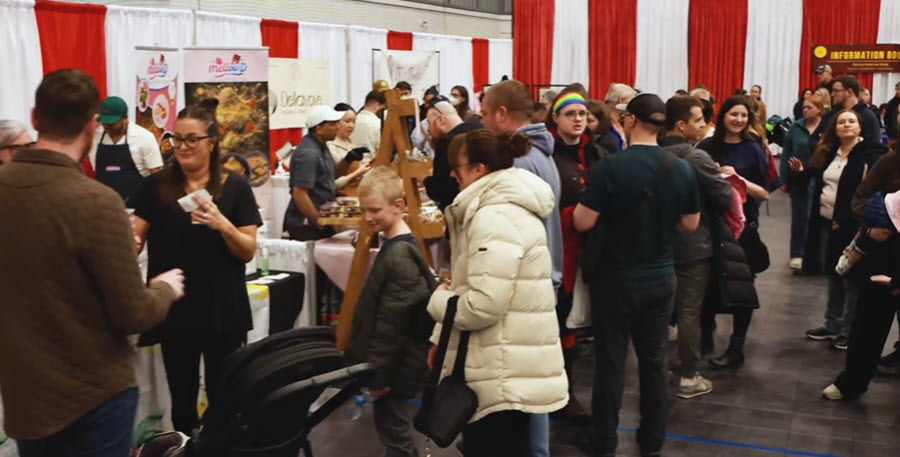
People ask me fairly often what a chocolate tasting festival actually is. If you’ve never been to ChocoFest, you might picture a farmers’ market or craft show with a lot more chocolate.
There is certainly a lot of chocolate, but ChocoFest works a little differently.
We bring more than 25 chocolate makers together in one room so you can taste what they make, compare chocolates from completely different makers and talk to the people behind them.
For me, meeting the makers is a big part of the experience.
Chocolate you may never find at home
There are some wonderful small chocolate businesses in Canada, but you’re unlikely to stumble across all of them while shopping.
Many are small-batch businesses without retail storefronts. Some sell online or at markets. Some are hundreds or thousands of kilometres away.
At ChocoFest, you can find them all in one place.
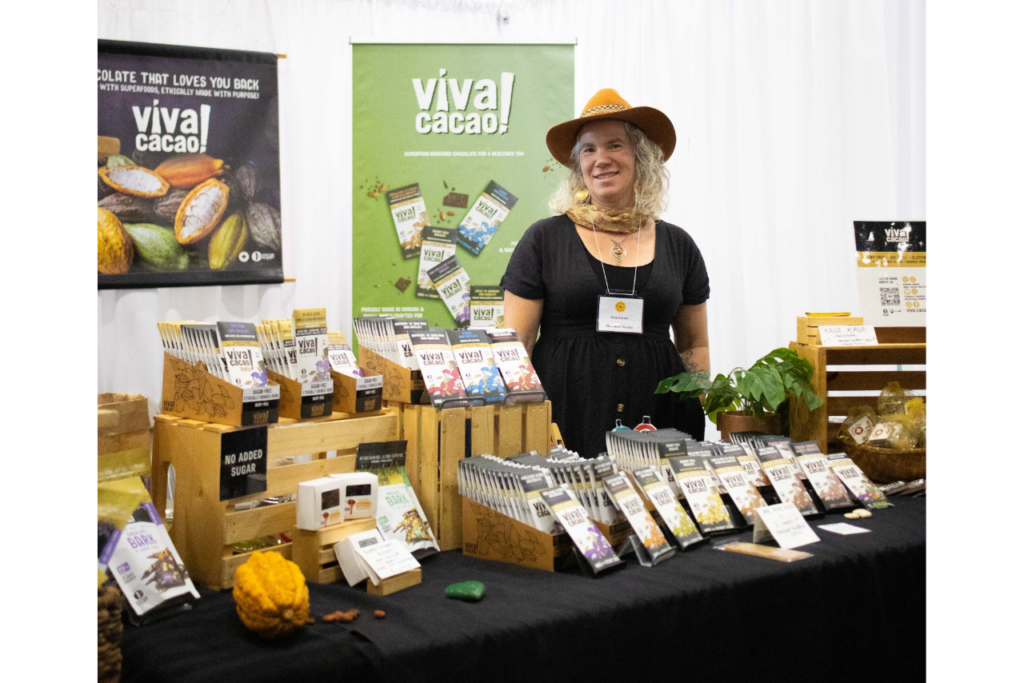
Beth Campbell of Viva Cacao! comes from Slocan, BC. She makes small-batch, plant-based chocolate using ingredients such as coconut sugar and superfoods.
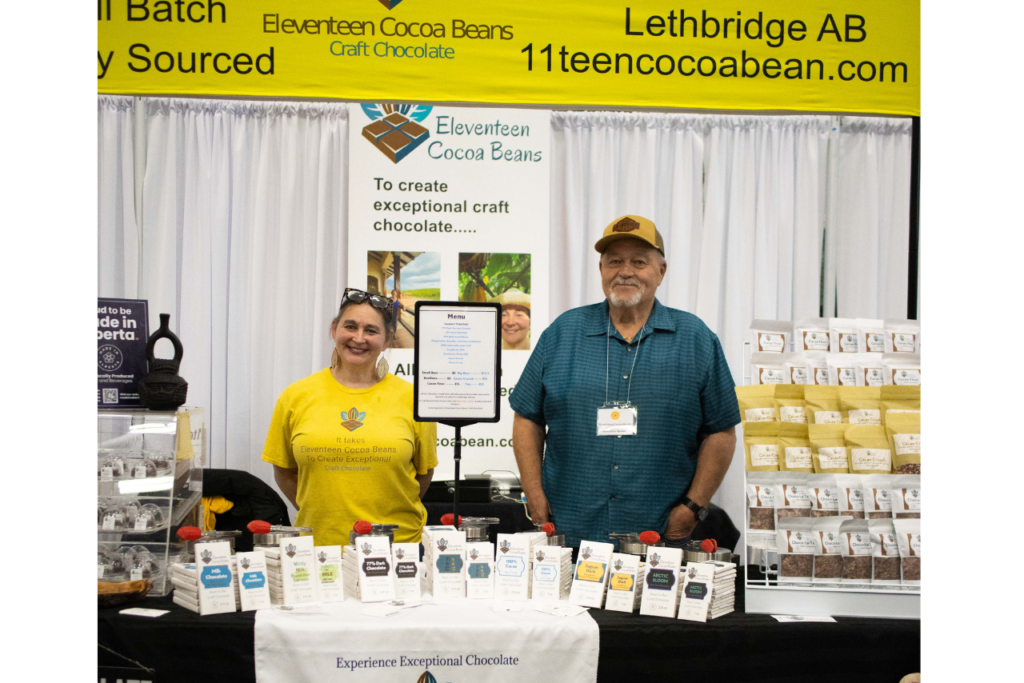
Rebekah Moedt of Eleventeen Cocoa Beans is in Lethbridge, Alberta. She works with cacao from Ecuador, Bolivia, Nicaragua, Mexico and Vietnam. She hand-sorts the beans, roasts them in small batches and refines her chocolate for up to 72 hours.
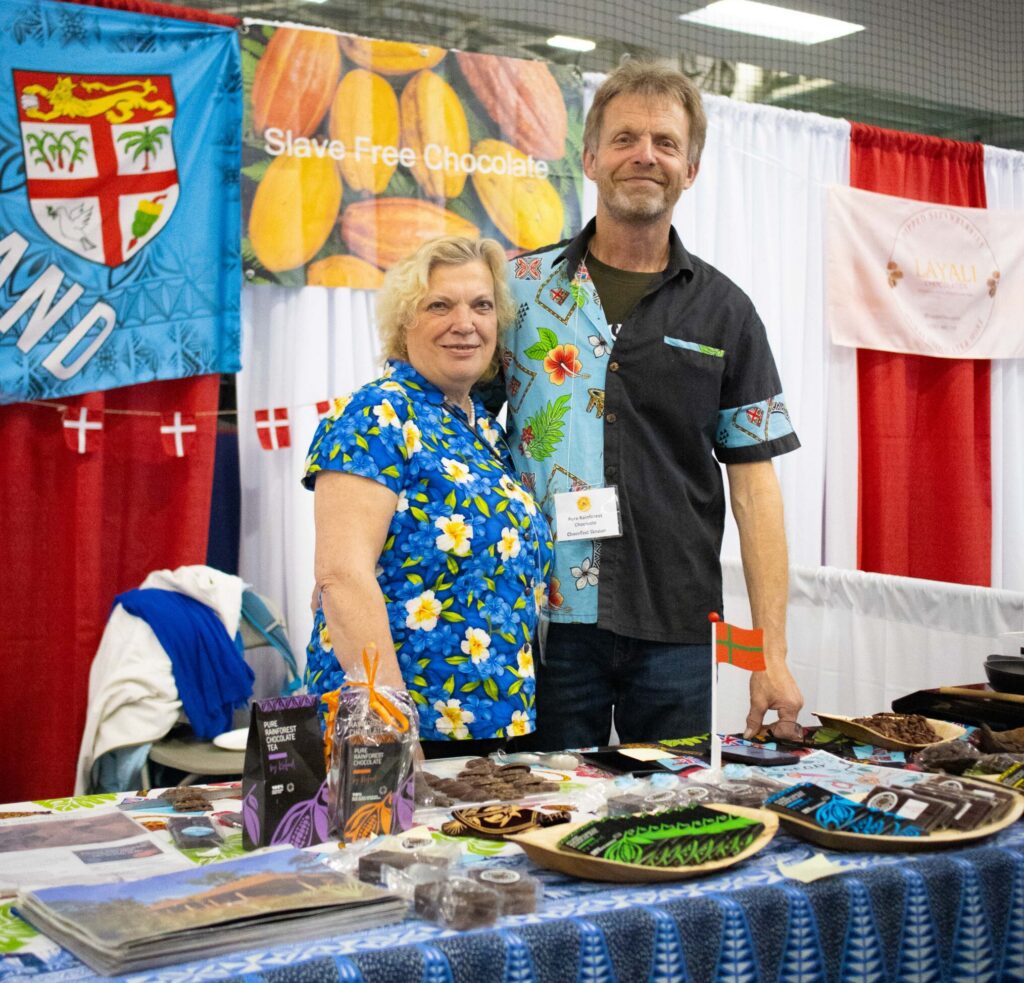
Heidrun Koefoed of Pure Rainforest is travelling considerably farther. She comes from Bornholm, Denmark, with chocolate made from cacao sourced directly from Fiji. Her 70% Fiji bar has only two ingredients: cacao and sugar.
They all make chocolate. They don’t make anything close to the same chocolate.
All three will be at ChocoFest in Edmonton and Calgary in 2027, along with more than 20 other chocolate makers.
A 70% chocolate bar doesn’t tell you what it will taste like
This is something I didn’t understand nearly as well before I started learning more about chocolate.
You can pick up two bars that both say 70% dark chocolate and discover they taste nothing alike.
Where the cacao was grown makes a difference. So do the cacao variety, growing conditions, fermentation and drying.
Then the chocolate maker gets the beans.
How they roast, grind, refine and conch them affects the finished chocolate too. So does the amount of sugar and anything else they decide to add.
That 70% on the wrapper isn’t telling you the flavour.
One chocolate may taste fruity. Another might be nutty, earthy, floral or remind you of caramel. Put several of them beside each other and the differences become much easier to recognize.
You don’t need to know the proper tasting terminology either. If one tastes like raisins to you, it tastes like raisins to you.
Ask the chocolate maker who made it
I love watching what happens when someone stops tasting long enough to start asking questions.
Where did this cacao come from?
Why did you choose it?
How did you come up with this flavour?
What am I tasting here?
The person standing on the other side of the table often knows that chocolate right back to the cacao bean.
Not everyone at ChocoFest makes chocolate the same way. Some exhibitors make their chocolate directly from cacao beans. Some are chocolatiers making bonbons, truffles and other confections with chocolate. Some love experimenting with flavours. Others make very simple bars where the cacao is doing most of the talking.
You can wander from one booth to the next and taste just how different those approaches are.
Why ChocoFest uses taste tickets
ChocoFest isn’t a free-sample event.
Guests buy taste tickets and exchange one ticket for a tasting portion from a chocolate maker. Our tasting portion is 10 grams, and some makers offer full-size bonbons and other substantial tastes.
We chose this system very deliberately.
When every sample is free, it’s easy to walk along a row of tables taking whatever is handed to you. A taste ticket makes you stop for a second and decide, “Do I want to try that?”
That little decision changes the interaction.
People ask what something is. They talk to the maker. They choose the chocolates that interest them rather than trying to collect one of everything.
There is another important reason we use taste tickets. The chocolate makers are paid for what they serve.
At ChocoFest 2026, guests redeemed 19,720 taste tickets. Almost $25,000 went back to the chocolate makers for those tastings.
That’s a lot of chocolate.
Try one chocolate beside a different chocolate
One of the best things you can do at ChocoFest is compare.
Try a milk chocolate and then a dark milk.
Taste a couple of 70% bars from different makers.
Try chocolate made with cacao from different countries.
Try something you are fairly certain you won’t like.
That last one can be interesting.
You may discover that the dark chocolate you thought you didn’t like was one particular dark chocolate. You may find out that cacao from one region has flavours you love. You may also try something once and decide once was quite enough.
I recently visited Andrew Bennett of Cacaoworks in Airdrie and saw some of the savoury bars he’s working with.
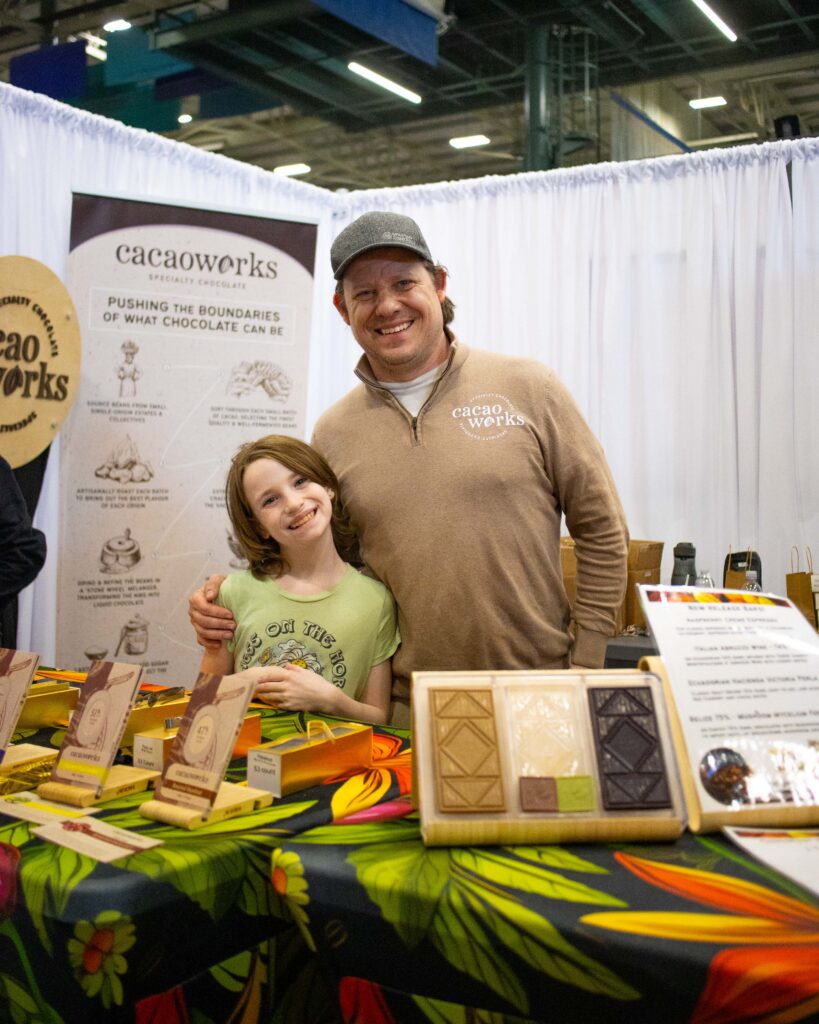
Garlic and chocolate?
Yes.
Would I try it?
Of course I would.
That’s what ChocoFest is for.
Come curious to a chocolate tasting festival
You don’t need to know anything about cacao percentages, origins, fermentation or tasting notes before coming to ChocoFest.
I certainly didn’t start there.
I just really liked good chocolate and wanted to know more about it.
ChocoFest gives you a chance to do that with more than 25 chocolate makers in the same room.
ChocoFest Edmonton is April 9 & 10, 2027 at the Edmonton Inn & Conference Centre.
ChocoFest Calgary is May 14 & 15, 2027 at the Red & White Club at McMahon Stadium.
Come hungry. Come curious.
There will be chocolate.
